
Brother HSe Heat-Shrink Tube Labels Explained: The Professional Standard for Permanent Cable Labeling
Posted by Bryan L on 12/13/2025
If you’ve ever opened an electrical panel, AV rack, or vehicle wiring loom and thought “Who labeled this… and why can’t I read it?”—you already understand the problem this article solves.
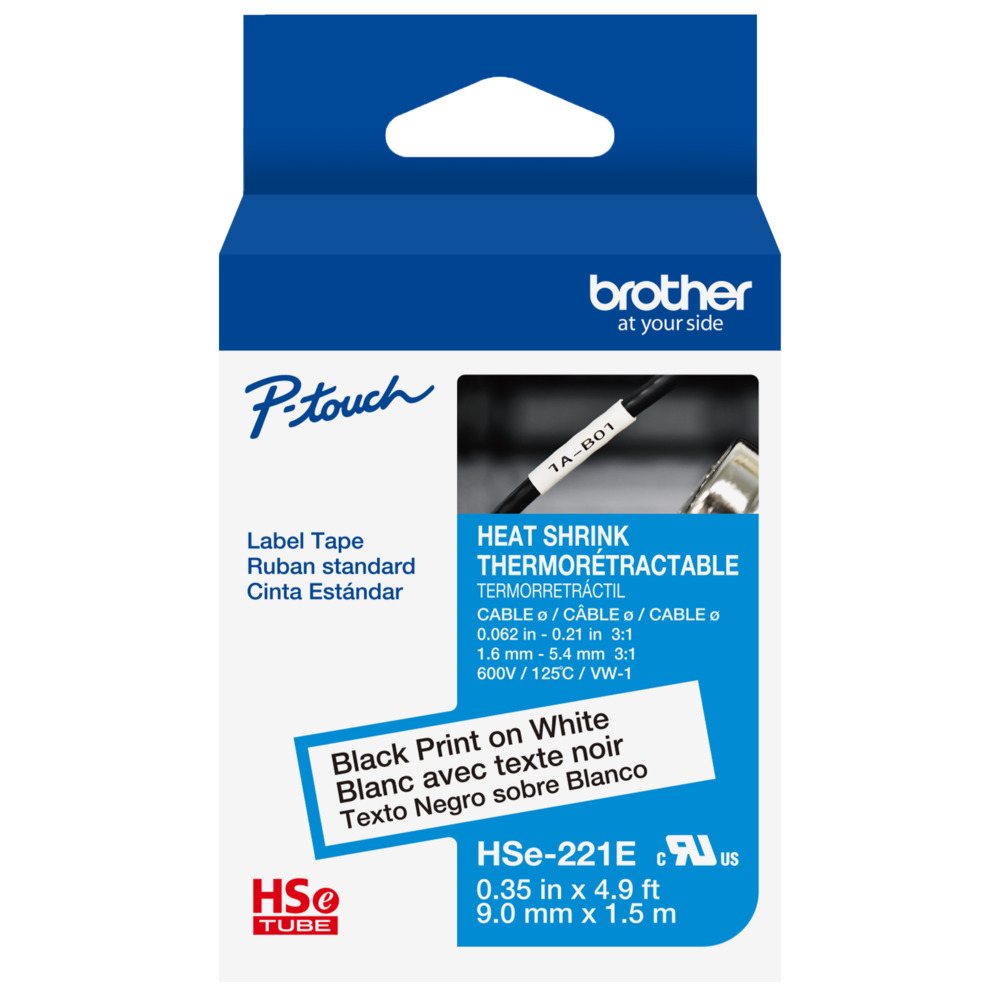 Cable labeling is one of those things that doesn’t get much attention until it fails. Adhesive labels peel. Ink fades. Tape slides down the wire. And when that happens, troubleshooting takes longer, inspections get harder, and callbacks increase.
That’s exactly why Brother HSe heat-shrink tubes exist—and why electricians, AV installers, and automotive wiring professionals rely on them for permanent, compliance-ready cable labeling.
I’ve been selling Brother label makers and tapes for nearly two decades, and HSe is one of those products that doesn’t get talked about enough—but once a pro uses it, they rarely go back.
Let’s break it down.
What Is Brother HSe Tape and How Does It Work?
Brother HSe tape isn’t adhesive tape at all. It’s printable heat-shrink tubing designed specifically for professional cable identification.
Instead of wrapping a label around a wire, you slide the tubing over the cable before termination, print your text, and apply heat. The tube shrinks evenly around the wire, creating a clean, permanent label that won’t move, peel, or fade.
What Makes HSe Different from Standard Label Tapes
Here’s where HSe really stands apart:
- No adhesive to fail over time
- No wrap seam to lift or curl
- No sliding down the cable
- No smudging or fading
Brother HSe tubing uses a 3:1 shrink ratio, which means it can shrink to one-third of its original diameter. That gives you flexibility when working with different wire gauges while still locking tightly into place.
From a professional standpoint, this matters because once the label is shrunk, it becomes part of the cable—not something stuck onto it.
Compatible Brother P-Touch Printers for HSe Tapes
Not every P-touch printer supports HSe tapes. These are designed for industrial and professional Brother models, including the PT-E series and select jobsite printers.
Current Models: PTE300, PTE310BTVP, PTE500, PTE510VP, PTE550W, PTE560BT, PTE800W, PTD800W, PTP900W, PTP950NW
That’s intentional. HSe labels are meant for environments where durability matters more than convenience.
If you’re working in electrical panels, racks, vehicles, or machinery, using the right printer is just as important as using the right tape.
Why Heat-Shrink Tube Labels Are the Gold Standard for Cable Identification
There’s a reason inspectors, maintenance teams, and seasoned tradespeople all lean toward heat-shrink labeling.
Permanent vs Temporary Cable Labels
Standard laminated labels work fine in offices and light-duty environments. But in real-world job conditions, they have limits.
Adhesive labels can fail due to:
- Heat
- Oil and grease
- Moisture
- Vibration
- Time
Heat-shrink tube labels eliminate all of that. Once applied, they don’t rely on glue. They’re mechanically locked onto the wire.
That’s why heat-shrink labeling has become the preferred method for permanent cable ID in professional settings.
Long-Term Readability in Harsh Environments
One thing I hear from customers all the time is, “I just need it to still be readable five or ten years from now.”
HSe labels hold up exceptionally well in:
- Electrical panels
- Industrial control cabinets
- AV racks
- Vehicles and engine bays
- Marine and outdoor environments
If someone else has to service that system years later, the labels still look intentional—and readable.
Cable Labeling with Heat Shrink: Real-World Professional Use Cases
This is where HSe really shines.
Electricians & Electrical Contractors
For electricians, heat-shrink labeling checks a lot of boxes:
- Clean panel labeling
- Clearly identified conductors
- Durable labels that survive heat and handling
While I won’t make inspection guarantees (every jurisdiction is different), I will say this: inspectors rarely complain about heat-shrink labels when they’re done cleanly and legibly.
Many electricians use HSe specifically for:
- Panel feeders
- Control wiring
- Switchgear and junction boxes
AV & Low-Voltage Installers
If you’ve ever opened a rack and tried to trace signal paths with unlabeled cables, you know how painful that can be.
AV installers use HSe labels because:
- They don’t slide or rotate on cables
- They stay readable even in tight racks
- They make future service calls much faster
I’ve had AV customers tell me the labels pay for themselves on the next service visit alone.
Automotive & Fleet Wiring
Vehicles introduce heat, vibration, fluids, and tight spaces—exactly where adhesive labels struggle.
HSe labels are commonly used for:
- Fleet wiring
- Specialty vehicles
- Marine and off-road applications
Once shrunk, the label becomes part of the harness. No peeling, no rattling loose, no mystery wires later.
Brother HSe Tape Sizes, Colors, and Shrink Ratios Explained
Choosing the right HSe tape isn’t complicated, but it does require a little planning.
Choosing the Right Diameter Before Shrinking
This is the most common mistake I see.
You need to size the tubing before shrinking, based on:
- Wire gauge
- Insulation thickness
- Any connectors the tube needs to slide over
A good rule of thumb:
Choose a size that slides easily over the wire before termination, then rely on the 3:1 shrink to lock it down.
If you undersize it, you’ll never get it on. Oversize it too much, and you may not get the snug fit you want.
Color Options and Readability Best Practices
Most professionals stick with:
- White tubing with black text
- Yellow tubing with black text
These combinations provide the best long-term readability.
Flashy colors might look good initially, but contrast matters more than style—especially in low-light environments.
How to Print and Apply Brother HSe Heat-Shrink Labels (Step-by-Step)
Using HSe is straightforward once you’ve done it a few times.
Printing Tips for Clean, Professional Results
A few practical tips:
- Use clear, simple fonts
- Avoid overly small text
- Match font size to tubing diameter
- Keep labels concise
Overcrowding text is the fastest way to ruin an otherwise great label.
Shrinking Methods: Heat Gun vs Other Options
A heat gun is the preferred tool. Apply heat evenly while rotating the cable.
Avoid:
- Open flames
- Excessive heat in one spot
You’re aiming for a smooth, uniform shrink—not scorched tubing.
When done correctly, the result looks factory-installed.
Common Mistakes Professionals Make with Heat-Shrink Cable Labels
Even experienced users make these mistakes early on:
- Printing labels after termination
- Choosing tubing that’s too small
- Overshrinking and distorting text
- Using consumer printers not designed for HSe
- Trying to save money with generic tubing
In my experience, genuine Brother HSe tape produces more consistent results with fewer headaches.
Why Professionals Choose Genuine Brother HSe Over Generic Heat-Shrink Labels
There’s no shortage of generic heat-shrink tubing out there. Some of it is fine—but when it comes to print quality and consistency, Brother HSe stands out.
Professionals choose it because:
- Print stays crisp after shrinking
- Shrink ratio is predictable
- Tubing quality is consistent
- Less rework and fewer callbacks
Over time, reliability matters more than saving a few dollars per roll.
Is Brother HSe Heat-Shrink Tape Worth It for Small & Mid-Sized Businesses?
Short answer: yes, if you care about professionalism and long-term results.
The upfront cost is higher than basic labels, but:
- Install time is minimal
- Labels last the life of the system
- Future troubleshooting is faster
- Your work looks intentional and professional
For many businesses, that’s a solid return on investment.
Where to Buy Genuine Brother HSe Tape and Compatible Printers
If you’re investing in heat-shrink labeling, make sure you’re buying genuine Brother HSe tape and a compatible professional printer.
At PtouchDirect.com, we specialize in Brother products and help customers make sure they’re using the right tape for the job—not just whatever happens to fit.
Final Thoughts
Heat-shrink tube labels aren’t flashy, but they solve real problems.
If your work involves:
- Electrical systems
- AV installs
- Automotive or fleet wiring
Brother HSe heat-shrink labels are one of the most reliable ways to make your cable labeling permanent, readable, and professional.
Once you use them on a job, it’s hard to go back.